
3 Best Reef-Safe Sunscreens for Perfect Vacation
When choosing reef-safe sunscreens for your vacation, you want options that protect your skin without harming delicate marine life; the Coral Safe Mineral Sunscreen SPF 50, Blue Lizard Sensitive SPF 50+, and Neutrogena Beach Defense SPF 50 all fit the bill, but each has its nuances. Mineral ingredients like zinc oxide reflect UV rays effectively, yet application methods and water resistance vary—despite their advantages, some formulations may feel heavier or require frequent reapplication. This makes comparing their features worthwhile before you pack.
Reef Safe Mineral Sunscreen SPF 50 Travel Lotion by Coral Safe

- REEF SAFE SUNSCREEN - Our Mineral sunscreen is approved by Hawaii & Mexico, and provides...
- 🌿 RAW TEXTURE - The Raw consistency of our formula ensures a smooth and easy application, leaving...
Last update on 2026-06-09 at 21:35 / Affiliate links / Images from Amazon Product Advertising API
If you want a sunscreen that protects your skin and is gentle to the environment, the Reef Safe Mineral Sunscreen SPF 50 Travel Lotion by Coral Safe is a good pick. It has a special, eco-friendly formula that breaks down naturally and is safe for coral reefs. The lotion contains zinc oxide and vitamin E. These ingredients help block UV rays while caring for your skin. It goes on smoothly and doesn’t leave a big white mark, even if you put a lot on. It also stays water-resistant for up to 80 minutes, so it’s great for swimming or outdoor fun. Plus, it has no harmful chemicals like oxybenzone and octinoxate, which can hurt reefs. Some people might find it a little wetter and less matte than chemical sunscreens, but its eco-friendly design makes it worth trying.
Best For: People who care about protecting nature and want strong sun protection that’s gentle for their skin.
Pros:
- Safe for the environment, breaks down naturally, and protects marine life
- Uses zinc oxide and vitamin E to shield your skin from the sun
- Water-resistant for up to 80 minutes, good for swimming or outdoor activities
Cons:
- Might feel a little more dewy or shiny than chemical sunscreens
- May leave a small white mark if you put on too much
- Usually costs more than regular chemical sunscreens because of natural ingredients
Blue Lizard Sensitive SPF 50+ Mineral Sunscreen with Zinc Oxide, Water-Resistant, UVA/UVB, 3 oz

- POWERFUL MINERAL SUNSCREEN - Protect sensitive skin from the sun’s harmful rays with Blue Lizard...
- SPF 50 BROAD SPECTRUM PROTECTION - The water-resistant formula provides broad spectrum protection...

Last update on 2026-07-07 at 09:30 / Affiliate links / Images from Amazon Product Advertising API
Choosing a reef-safe sunscreen like Blue Lizard Sensitive SPF 50+ is a good idea if you want to protect your skin and help the environment. This mineral sunscreen uses zinc oxide to block UV rays. It offers broad-spectrum protection with SPF 50+. Plus, it’s water-resistant, so you can swim or stay active without needing to reapply often. It’s made for sensitive skin, so it’s hypoallergenic and fragrance-free. It also doesn’t have harsh chemicals like oxybenzone or octinoxate, which can damage reefs. The sunscreen contains organic aloe vera to soothe and keep your skin moisturized. Its small 3 oz tube is easy to carry on trips, so you stay protected wherever you go.
Best For: People with sensitive skin who want strong, reef-safe sun protection for outdoor activities.
Pros:
- Protects against UVA and UVB rays
- Water-resistant for swimming and outdoor fun
- Fragrance-free and gentle on sensitive skin
Cons:
- Needs to be reapplied after long time in water
- Might leave a slight white tint on skin
- Small size, so you might need to buy more for longer use
This sunscreen is simple to use and good for your skin and the environment. It’s perfect for days at the beach, pool, or anywhere you enjoy the sun.
Neutrogena Sunscreen Lotion Beach Defense SPF 50 for Face and Body
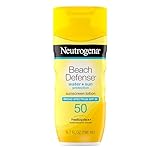
- One, 6.7 fl oz bottle of Neutrogena Beach Defense Face & Body Sunscreen Lotion with SPF 50. Get...
- Neutrogena Beach Defense with Helioplex technology offers superior broad-spectrum UVA/UVB sun...
Last update on 2026-06-09 at 21:35 / Affiliate links / Images from Amazon Product Advertising API
The Neutrogena Sunscreen Lotion Beach Defense SPF 50 is a good choice for anyone who spends a lot of time outside. Whether you’re at the beach or poolside, this sunscreen works well. It feels lightweight and absorbs quickly, so it’s easy to put on and not greasy. The Helioplex technology gives you broad-spectrum UVA/UVB protection, which helps prevent sunburn and aging rays. It’s also safe for the environment because it follows the Hawaii Reef Act 104. This means it doesn’t contain oxybenzone or octinoxate, ingredients that can harm coral reefs.
Some people might notice a slight greasiness at first, but it’s usually not a problem once rubbed in. If you swim or sweat a lot, you should reapply to stay protected. The bottle is a little big, so it may not be the best choice for carrying around all day.
Best for: People who spend lots of time outside and want a sunscreen that’s safe for the environment, quick to absorb, and water-resistant.
Pros:
- Protects against UVA and UVB rays with special Helioplex tech
- Reef-safe and follows Hawaii Reef Act 104 rules
- Absorbs fast, is oil-free, and feels light on the skin
Cons:
- Might feel a bit greasy at first
- Needs reapplying after swimming or sweating
- The big bottle can be harder to carry around
Factors to Consider When Choosing Reef-Safe Sunscreens for Vacation
When selecting reef-safe sunscreens for your vacation, you’ll want to take into account several important factors. Certifications indicate whether products truly protect marine life, while SPF levels ensure adequate skin coverage, especially in intense sunlight. Additionally, understanding water resistance duration, skin compatibility, and the natural ingredients used can help you find a safe, effective sunscreen that aligns with both your skin’s needs and environmental concerns.
Reef Safety Certification
Even though many sunscreens say they are reef-safe, it’s good to look for official labels or symbols. These labels come from trusted groups or agencies. They test the sunscreens to make sure they are safe for the ocean and don’t have harmful chemicals like oxybenzone and octinoxate.
Examples of these labels include those from Hawaii’s Department of Health or international groups. When you see these labels, it means the sunscreen has been tested and meets rules for being biodegradable and safe for both humans and marine life.
Picking a sunscreen with a reef safety label gives you confidence that it is eco-friendly. Some of these certified sunscreens may cost more or be harder to find. Still, they are often better for the environment and can make your beach trip safer and more fun.
SPF Effectiveness Levels
Have you wondered if a higher SPF really means better protection? Or if it’s just a way for brands to sell more sunscreen? SPF shows how well a sunscreen blocks UVB rays. These are the rays that cause sunburn and skin damage.
SPF 30 blocks about 97% of UVB rays. SPF 50 blocks about 98%. The difference is small, but it can matter when you stay outside for a long time or go swimming. Higher SPFs, like 100, don’t add much extra protection. So, choosing SPF 50 is often good enough.
Remember, sunscreen’s protection fades over time. Reapply every two hours or after swimming or sweating. It’s more important to use enough sunscreen and reapply often than to pick the highest SPF.
Look for a sunscreen that is safe for reefs, has at least SPF 30 or 50, and is easy to use. That way, you can stay protected and enjoy your time outside.
Skin Compatibility
Choosing the right reef-safe sunscreen for your trip depends on your skin type. If your skin is sensitive or easy to get allergic reactions, pick a sunscreen made for sensitive skin. These are gentle and help prevent irritation. Look for sunscreens with mineral ingredients like zinc oxide or titanium dioxide. These are softer on your skin and less likely to cause problems.
Check the label carefully. Avoid sunscreens with fragrances, parabens, oxybenzone, or octinoxate. These ingredients can irritate or cause allergies. Instead, choose products with soothing ingredients like aloe vera or vitamin E. These help keep your skin hydrated and comfortable in the sun.
It’s a good idea to test a small patch of skin with the new sunscreen first. This helps you see if your skin reacts badly before putting it all over. Doing this can help you avoid discomfort during your vacation.
Water Resistance Duration
Water resistance tells you how long your sunscreen stays effective in water or when you’re sweating. Sunscreens are labeled for either 40 or 80 minutes of water resistance. If your sunscreen has 80 minutes, it will work longer during swimming or heavy sweating. Sunscreens with 40 minutes last a shorter time.
Natural Ingredient Content
When choosing reef-safe sunscreens, it’s helpful to know what natural ingredients they have. These sunscreens often use minerals like zinc oxide or titanium dioxide. These minerals create a physical shield that blocks the sun’s rays. They are a better choice for the ocean and sea life than chemical filters.
Many natural sunscreens avoid synthetic chemicals, preservatives, parabens, and artificial colors or scents. These ingredients can harm coral reefs and sea animals. Natural sunscreens are often biodegradable. This means they break down easily after you wash them off, which helps protect the environment.
Some sunscreens add ingredients like aloe vera or vitamin E. These soothe your skin and can also give extra protection if you stay outside for a long time. Always check the label or certification to make sure the sunscreen is really reef-safe.
Choosing sunscreens with natural, mineral ingredients helps protect your skin and the sea. It’s a simple way to enjoy the sun without harming the ocean.
Application and Feel
Even though many reef-safe sunscreens have ingredients that are good for the environment, how they feel when you put them on can be different. Some sunscreens go on smoothly and don’t leave you feeling greasy. They spread easily and cover your skin evenly. This makes applying sunscreen easier and stops white streaks from showing up. Sunscreens with natural ingredients like zinc oxide and vitamin E often feel softer and more gentle on your skin. They can help reduce irritation and feel more comfortable.
It’s helpful to choose sunscreens that don’t leave a white cast. That means they don’t look chalky or residue-heavy when you apply them. Water-resistant sunscreens are also a good choice. They stay on your skin when you swim or sweat and don’t need to be reapplied as often.
Pick lightweight sunscreens that don’t feel sticky or heavy. They keep your skin feeling comfortable during long days outside. That way, you can enjoy your time in the sun without feeling weighed down or uncomfortable.
Frequently Asked Questions
Are Reef-Safe Sunscreens Effective Against All Sun Exposure Types?
Reef-safe sunscreens are effective for most sun exposures, but no sunscreen protects completely. Apply generously, reapply frequently, especially after swimming or sweating, and combine with other sun safety measures to guarantee maximum protection during your outdoor activities.
How Often Should Reef-Safe Sunscreen Be Reapplied During Water Activities?
You should reapply reef-safe sunscreen every two hours during water activities, or immediately after swimming, sweating, or towel drying. Doing so guarantees continuous protection and helps preserve marine environments while keeping your skin safe.
Can Reef-Safe Sunscreens Be Used on Sensitive Skin?
Yes, reef-safe sunscreens can be used on sensitive skin. Look for formulas labeled hypoallergenic or formulated for sensitive skin, and do a patch test first. Choose mineral-based sunscreens with zinc oxide or titanium dioxide for gentle protection.
Do Reef-Safe Sunscreens Leave a White Cast or Residue?
Reef-safe sunscreens might leave a slight white cast or residue, especially if you have darker skin tones. However, many formulas now include better ingredients that minimize this effect, so try different types to find what works best.
Are There Environmentally Friendly Sunscreen Packaging Options?
Yes, environmentally friendly sunscreen packaging options exist, like biodegradable tubes and refillable containers. You can choose brands that prioritize sustainable materials, helping reduce plastic waste while protecting yourself and the ocean environment during your vacation.