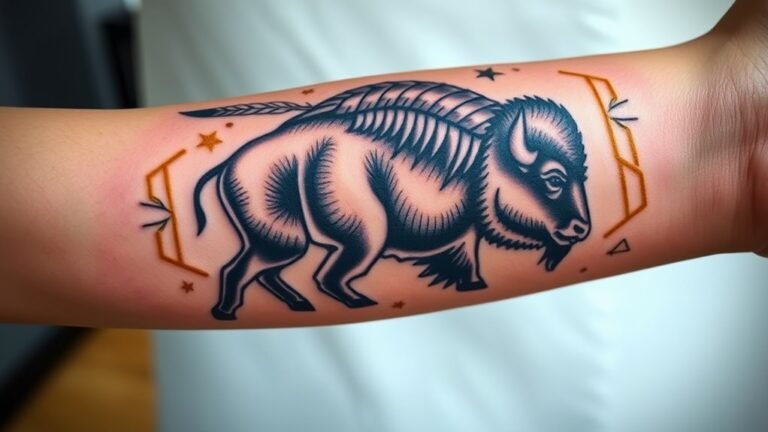
Japanese Tiger Tattoo Meaning and Symbolism
When you think about Japanese tiger tattoos, you might immediately connect them with strength and courage, but their symbolism runs much deeper. These striking designs carry rich cultural significance, acting as powerful guardians against evil spirits while reflecting individuality through their unique patterns. As you explore the interplay between folklore and personal meaning, you'll discover how these tattoos not only serve as art but also as a profound statement of resilience. What might you uncover about your own connection to this fierce creature?
In a Nutshell
- Japanese tiger tattoos symbolize strength, courage, and protection, reflecting their role as guardians in folklore and mythology.
- The tiger's stripes represent individuality and unique personal power, inspiring resilience and determination.
- These tattoos serve as protective emblems, warding off evil spirits and providing reassurance during uncertain times.
- Irezumi, the traditional tattoo art, incorporates historical and cultural significance, fostering community among wearers.
- Tigers in Japanese culture embody a balance of ferocity and grace, representing the duality of nature and the spirit within individuals.
Cultural Significance of Tigers
While you might think of tigers as mere symbols of power and beauty, their cultural significance runs much deeper, especially in Japanese tradition.
In tiger mythology, these majestic creatures embody strength and protection, serving as spiritual guardians against misfortune. You'll find them woven into the fabric of folklore, depicted in art, and celebrated in festivals, reflecting a rich tapestry of cultural representations.
Tigers often symbolize the balance between ferocity and grace, embodying the duality of nature. As you explore these stories, you'll feel a connection to a world where tigers roam both the wild and the human heart, reminding you of resilience and the fierce spirit that lies within us all—inviting you to embrace your own strength and find belonging in this shared legacy.
Symbolism of Strength and Power
Tigers stand as powerful symbols of strength and power, embodying a fierce energy that resonates deeply within the human experience.
When you choose a tiger tattoo, you're embracing a representation of not just physical prowess, but also the inner strength that drives you to overcome challenges.
Tiger symbolism reflects courage, determination, and the primal instinct to protect what you cherish.
This majestic creature inspires you to tap into your own power, urging you to face fears head-on.
Each striking stripe on a tiger's coat signifies individuality, reminding you that strength comes from within.
Tigers in Japanese Folklore
In the rich tapestry of Japanese folklore, the tiger emerges as a powerful guardian, embodying both protection and ferocity.
You'll find that in Japanese mythology, tiger spirits are revered not only for their strength but also for their ability to ward off evil. These majestic creatures symbolize courage, reminding you that overcoming fears can lead to personal growth and transformation.
Stories abound of tigers prowling ancient forests, their roars echoing like thunder, instilling both awe and reverence. The tiger's striking stripes serve as a reminder of individuality and the beauty of embracing one's unique path.
As you explore these tales, you'll discover a profound connection to the spirit world, inviting you to seek strength in your own journey.
Protection and Guardianship
As you explore the symbolism of the tiger in Japanese culture, you'll find that it embodies not just raw power, but also an unwavering sense of protection and guardianship.
This majestic creature serves as a guardian spirit, warding off evil and bringing a sense of safety to those who bear its image. The tiger's protective qualities resonate deeply, offering spiritual symbolism that reassures you in times of uncertainty.
When inked into your skin, it becomes an emblem of strength, a reminder that you're never alone in your struggles. The tiger stands sentinel, its fierce gaze watching over you, instilling courage and resilience.
Embracing this powerful symbol connects you to a lineage of warriors and guardians, enveloping you in a warm sense of belonging.
Irezumi: Traditional Tattoo Art
Irezumi, the intricate art of traditional Japanese tattooing, weaves together history, mythology, and personal expression into stunning visual narratives.
You'll find that irezumi techniques, passed down through generations, involve hand-poking with bamboo tools, creating vibrant, bold designs that tell stories of strength, courage, and spirituality.
Each tattoo is rich in symbolism, often featuring mythical creatures like dragons and tigers, representing power and protection.
As you explore tattoo history, you'll discover how these art forms connect to cultural practices and beliefs, fostering a sense of belonging among wearers.
The meticulous detail in each piece reflects not just artistry but also a deep respect for tradition, allowing you to carry a part of Japan's heritage with you wherever you go.
Personal Meanings for Wearers
Tattooing isn't just an artistic expression; it's a deeply personal journey for many individuals. When you choose a Japanese tiger tattoo, you're likely weaving your own personal stories into the design.
For some, the tiger symbolizes strength and resilience, reflecting battles fought and won. Others may interpret the fierce nature of the tiger as a reminder to embrace their inner courage in challenging times.
Each tattoo carries individual interpretations, resonating with your unique experiences and emotions. This connection fosters a sense of belonging, allowing you to share your journey with others who appreciate the symbolism.
Ultimately, your tiger tattoo becomes a powerful emblem of your identity, a representation of the narratives that shape who you are.
Choosing a Tiger Tattoo Design
When selecting a tiger tattoo design, it's essential to reflect on how the imagery resonates with your personal journey and values.
Consider various tiger tattoo styles—like traditional, watercolor, or geometric—that speak to your aesthetic. Each style brings a unique flair, inviting you to explore its deeper meaning.
Don't overlook color symbolism; vibrant oranges and blacks embody strength and courage, while softer hues can evoke a sense of peace and balance.
Think about how these colors represent your spirit and aspirations.
Ultimately, your tiger tattoo should tell your story, symbolize your inner strength, and connect you to a community that shares similar passions.
Choose wisely, and let your design be a powerful emblem of who you are.
Frequently Asked Questions
What Are Common Placements for Tiger Tattoos on the Body?
When considering placements for your tiger tattoo, think about bold arm placements that showcase strength and vibrant back designs that symbolize power. Each choice reflects your personality and connection to this fierce creature's spirit.
How Do Tiger Tattoos Differ in Style Across Cultures?
Tiger tattoos vary widely across cultures, reflecting unique cultural interpretations and historical significance. In some traditions, they symbolize strength and courage, while others embrace a more spiritual connection, inviting you to explore your own identity and heritage.
Are There Any Specific Colors Associated With Tiger Tattoos?
When choosing tiger tattoo colors, you'll find vibrant oranges symbolize strength, while black often represents protection. Each hue carries cultural significance, reflecting your personal journey and connection to the powerful symbolism of this majestic creature.
Can Tiger Tattoos Have Negative Connotations?
Yes, tiger tattoos can have negative connotations. Depending on cultural perceptions, they might symbolize aggression or danger. Yet, remember, these interpretations vary widely, and the personal connection you feel shapes their true meaning for you.
What Should I Consider Before Getting a Tiger Tattoo?
Before getting a tiger tattoo, consider your design preferences and pain tolerance. Think about the symbolism it carries for you, and make certain it resonates with your identity, creating a sense of belonging within your personal narrative.